Almost nothing breaks while it is being carried. Things break in the van, on the move, in the twenty minutes between two addresses — and by then nobody is watching them.
Loading is the part of a move customers see least and judge least, which is exactly why it is worth explaining. What follows is the logic behind the order things go in, and what a badly loaded van does to furniture that was packed perfectly.
The order things go in
A van is loaded in layers from the front wall backwards, and the order is dictated by weight and shape rather than by which room it came from.
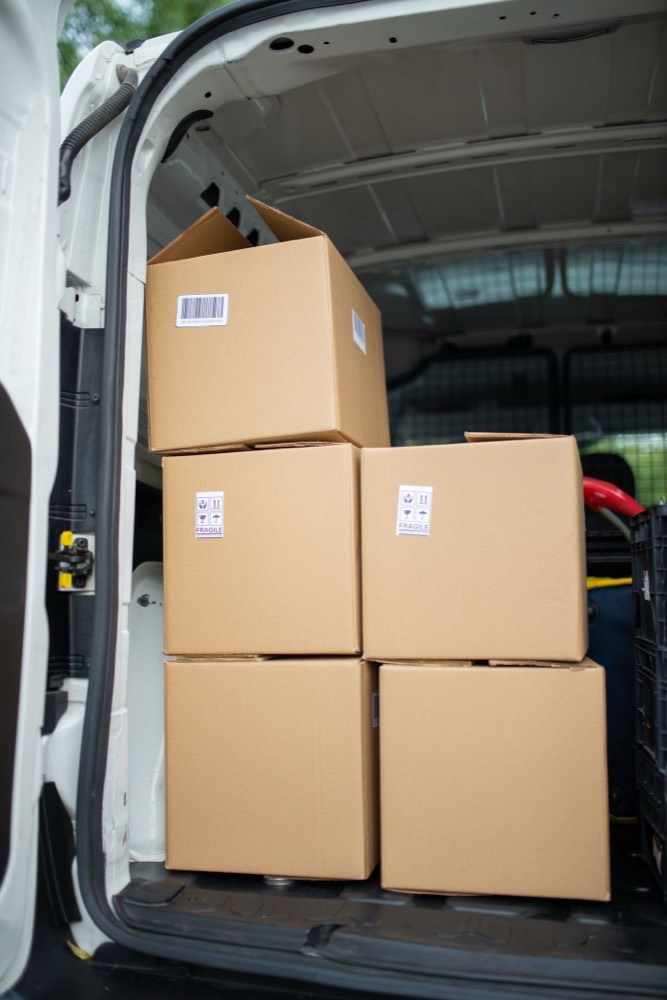
- Heaviest and squarest first, against the front wall — white goods, chests, the boxes of books. Weight belongs over the axle and low down, not at the back doors.
- Tall flat items vertically along the sides — wardrobe panels, mattresses, table tops, mirrors. Flat things travel standing on edge, not lying down with weight on them.
- Boxes stacked heavy at the bottom, light at the top, in even columns rather than a loose pile. A column that reaches the roof holds itself steady; one that stops halfway topples.
- Soft and awkward last — sofas, armchairs, bags of bedding. These fill the gaps and act as padding between hard surfaces.
- Anything needed first at the other end goes in last, by the doors: beds, tools, the kettle box.
Why an empty van is worse than a full one
This is counter-intuitive and it is the thing most people get wrong when they move themselves.
Things do not break because the van is full. They break because they have room to move. A tightly packed load holds itself in place: every item is braced by the ones around it, and nothing accelerates before it hits something.
A half-loaded van with a metre of open floor is where damage comes from. One roundabout, and a wardrobe panel that was standing neatly slides, turns, and lands on a corner. The gaps are the problem, not the volume — which is why we fill gaps with blankets and soft items rather than leaving a tidy-looking load with air in it.
Straps, and what they actually hold
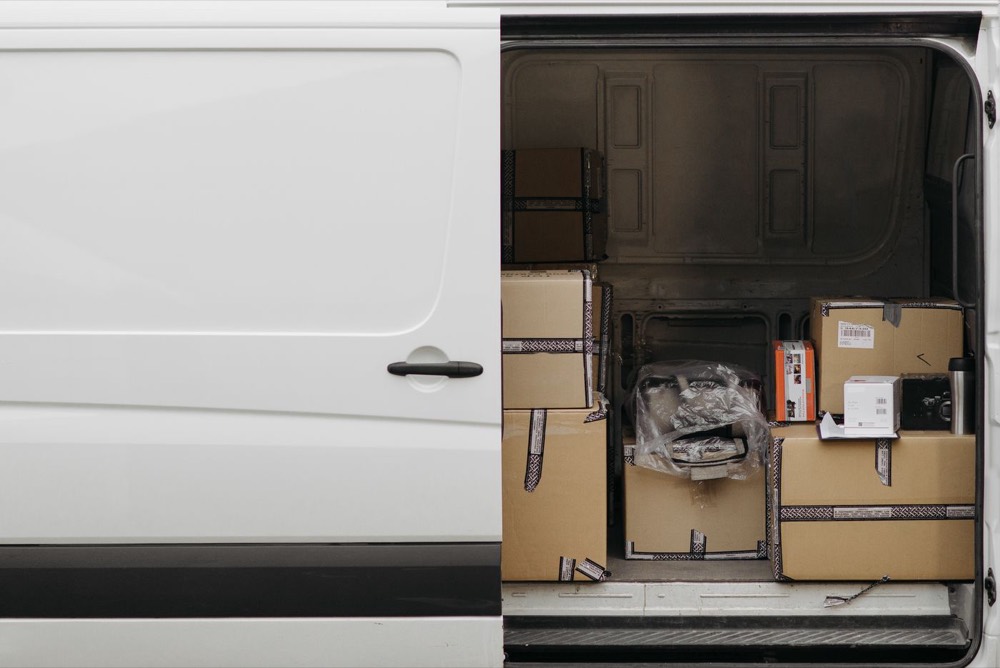
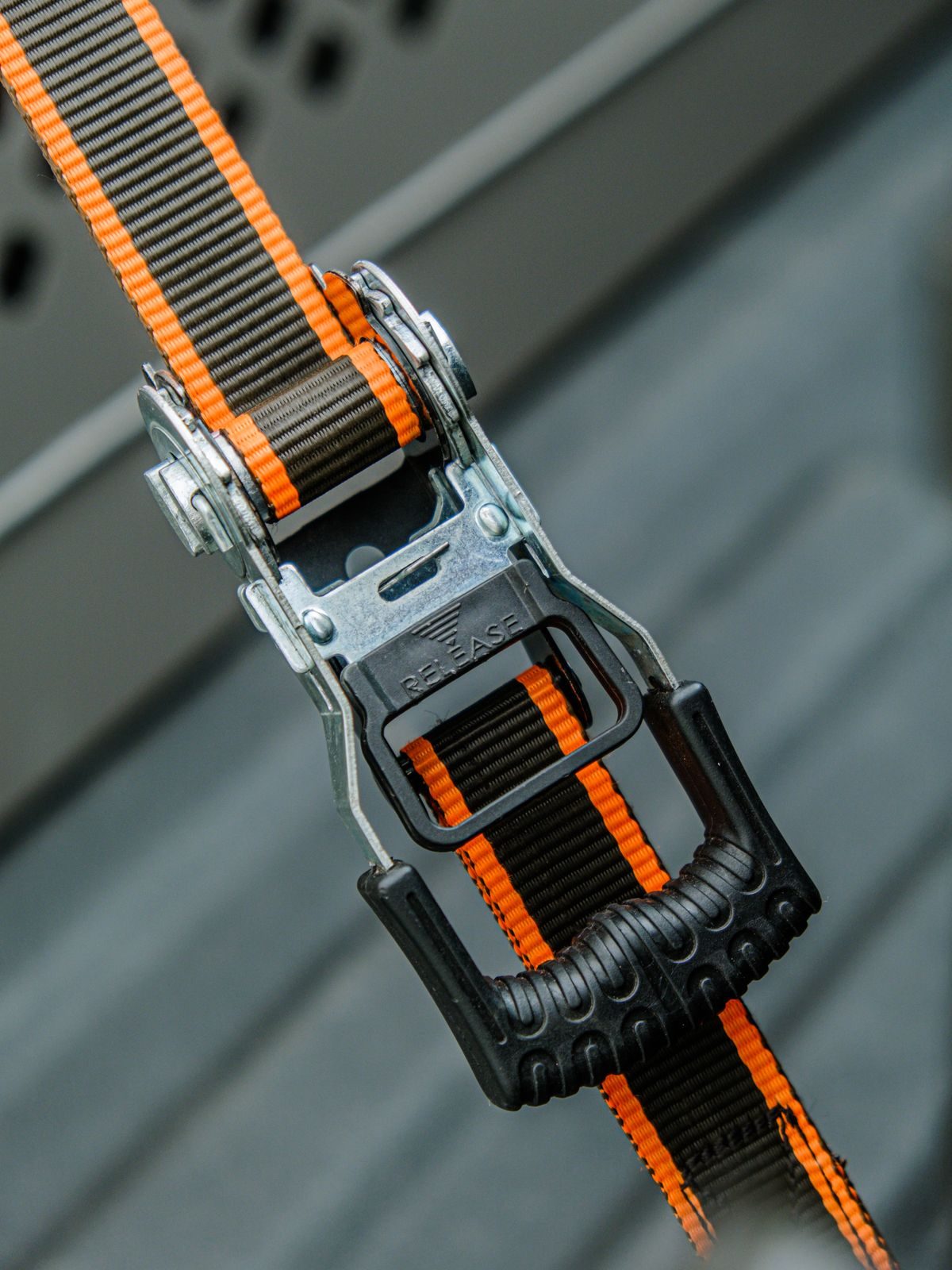
Every layer is strapped to the side rails before the next layer goes in — not at the end, when the load is already too deep to reach.
Straps hold things against the wall of the van. They do not hold a stack together, and they do not stop a badly built column from folding. A strap over a leaning stack tightens onto the weakest box and crushes it. That is why the stacking has to be right before anything is tensioned.
Under a strap, hard edges get padding. A ratchet strap pulled across a bare wardrobe edge leaves a mark in the finish that is permanent, and it is one of the more common ways a careful move still ends in a claim.
What the drive does
The forces that matter are not the ones people imagine. Speed does very little; direction changes do everything.
- Braking throws the load forward. This is why weight sits at the front and why nothing heavy travels near the doors.
- Roundabouts and turns push the load sideways. Lisbon is a city of turns, and a load that is stable in a straight line is not necessarily stable at Marquês de Pombal.
- Cobbles and speed bumps shake everything vertically and continuously. This is what loosens a stack over a twenty-minute drive, and it is why we re-check straps before setting off after a stop.
- Slopes. A van parked nose-down on a Lisbon hill loads differently from one on the flat, and the load shifts the moment it levels out.
Things that need their own place
Some items never go into the general load, whatever the pressure on space.
- Mirrors, glass and framed pictures travel vertically, on edge, between two soft items — never flat, and never with anything on top.
- Televisions stand upright, in a box if the original is gone. A flat-laid screen is a screen taking the weight of whatever ends up on it.
- Mattresses stand on edge, in a cover. A mattress used as padding under boxes arrives with permanent dents.
- Plants travel last, near the doors, upright, and out of the direct sun of the windscreen.
- Documents, keys, chargers, medication and valuables do not go in the van at all. They go in your car. We will remind you of this on the day, and we would rather remind you twice.
Unloading is not loading in reverse
At the other end things come out in the order they are needed, not simply the order they come to hand, and every box is placed in the room written on it rather than in a pile in the hall.
That is the whole reason for labelling by destination room. A box put down in the right room is finished; a box put down in the hall is a job you do later, alone, on a Sunday.
In short
- Heavy and square first against the front wall; soft and awkward last.
- Gaps cause damage, not volume — a half-empty van is the dangerous one.
- Straps go on layer by layer, with padding under them on hard edges.
- Turns and cobbles do the damage, not speed.
- Mirrors, screens and mattresses travel on edge, never flat under weight.
- Documents, keys and valuables travel with you, not in the van.
Want to know what van your move needs?
A ten-minute video call is enough to size the van, count the crew and give you a fixed price — including the blankets, straps and protection.
Get a fixed price