Packing looks like the easy part of a move and is the part that decides how much arrives intact. Almost every broken thing we have ever seen broke because of one of five or six mistakes, and all of them are avoidable.
This is the technique. What packing costs and how long it takes is on the packing service page — here we are describing what actually happens to your plates.
What we bring, and what each thing is for
Materials arrive with us. Whatever is left over goes back with us and is not charged.
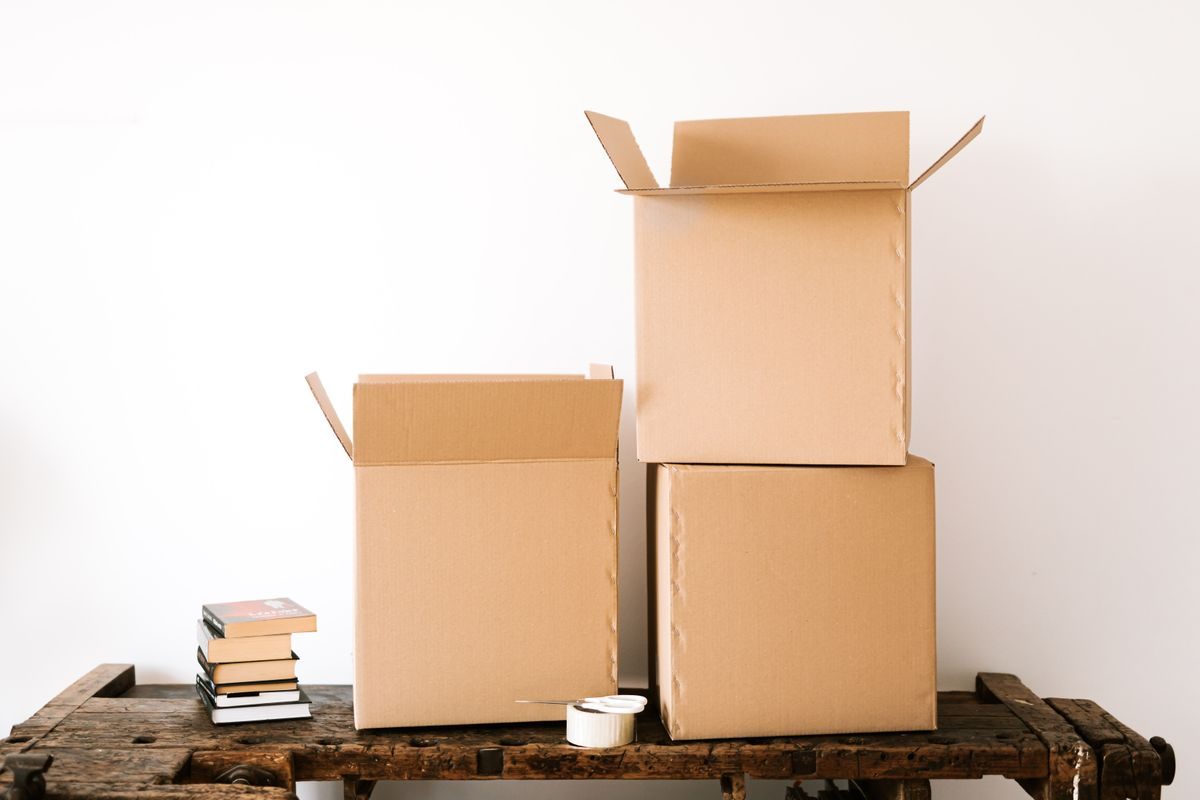
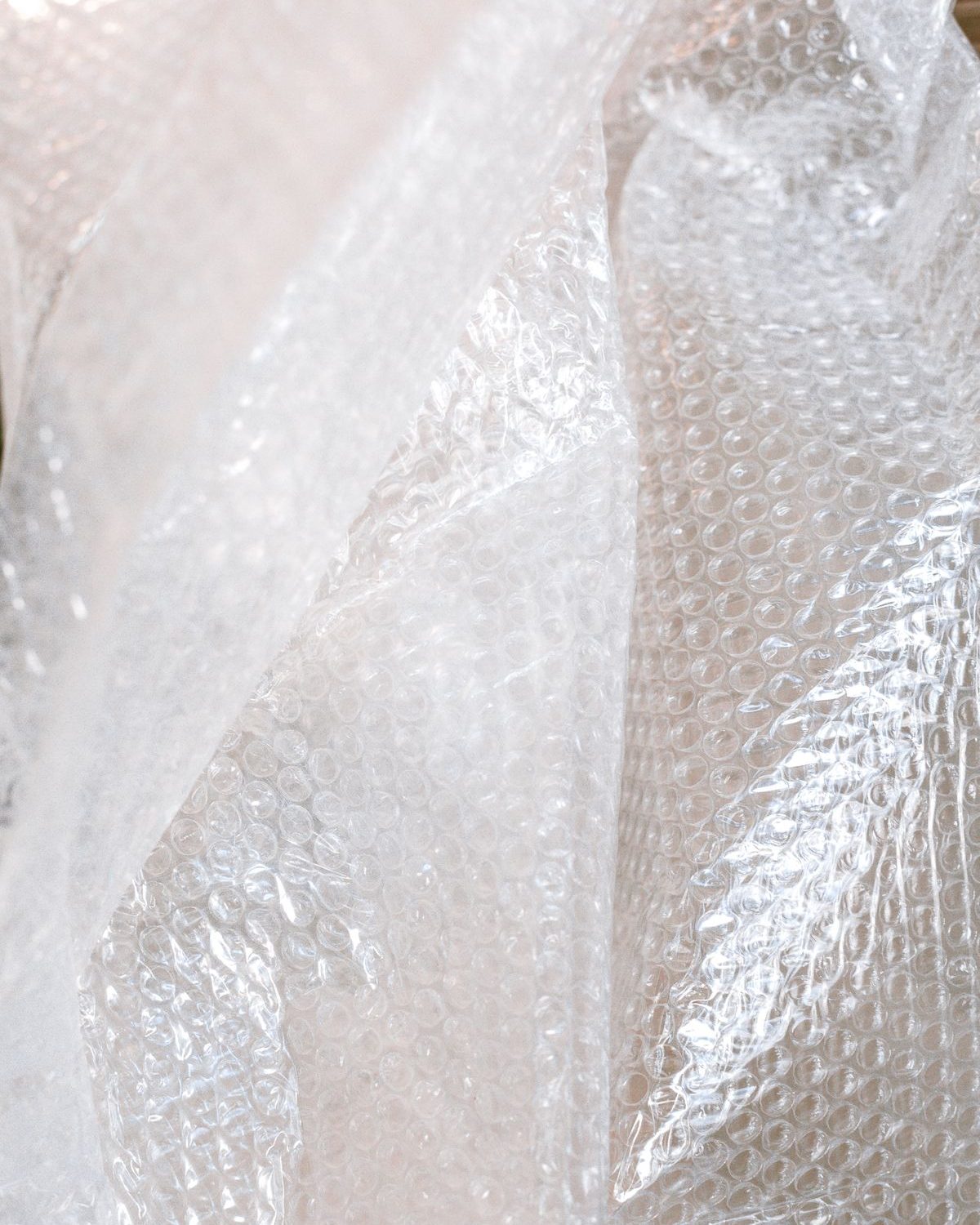
- Moving blankets — thick quilted covers for furniture. They absorb the knocks that stretch film cannot.
- Stretch film — holds the blanket in place and keeps drawers and doors shut. It goes over the blanket, never directly onto furniture.
- Bubble wrap and packing paper for individual fragile items.
- Boxes in two sizes, and this matters more than it sounds — see below.
- Wardrobe boxes with a rail, so hanging clothes travel upright and arrive wearable.
- Corner protectors and floor runners for the building itself.
The six rules that stop things breaking
In rough order of how often they are broken.
- Plates travel on their edge, not stacked flat. A stack of plates is a column that transfers the whole weight through the bottom one. On edge, each plate carries only itself. Wrapped individually and stood on edge, plates almost never break.
- Books go in small boxes. Not because they are fragile, but because a large box of books weighs more than anyone should carry down four flights. Small boxes for anything dense, large boxes for anything light — bedding, cushions, coats.
- Fill the box to the top. Empty space collapses under the box stacked on it, and everything inside shifts on the first corner. Towels, paper, socks — anything that fills a gap.
- Do not overfill either. A box whose lid will not close flat cannot be stacked, and a box that cannot be stacked either travels loose or crushes the one beneath it.
- Glasses in a divided box, standing up. On their side they roll into each other. Stems get paper wound around them first.
- Liquids in their own box, upright, at the top of the load. Cleaning products leak, and they leak onto whatever is underneath them for the whole journey.
Labelling: the room it is going to, not the room it came from
This single habit is the difference between unpacking and excavating.
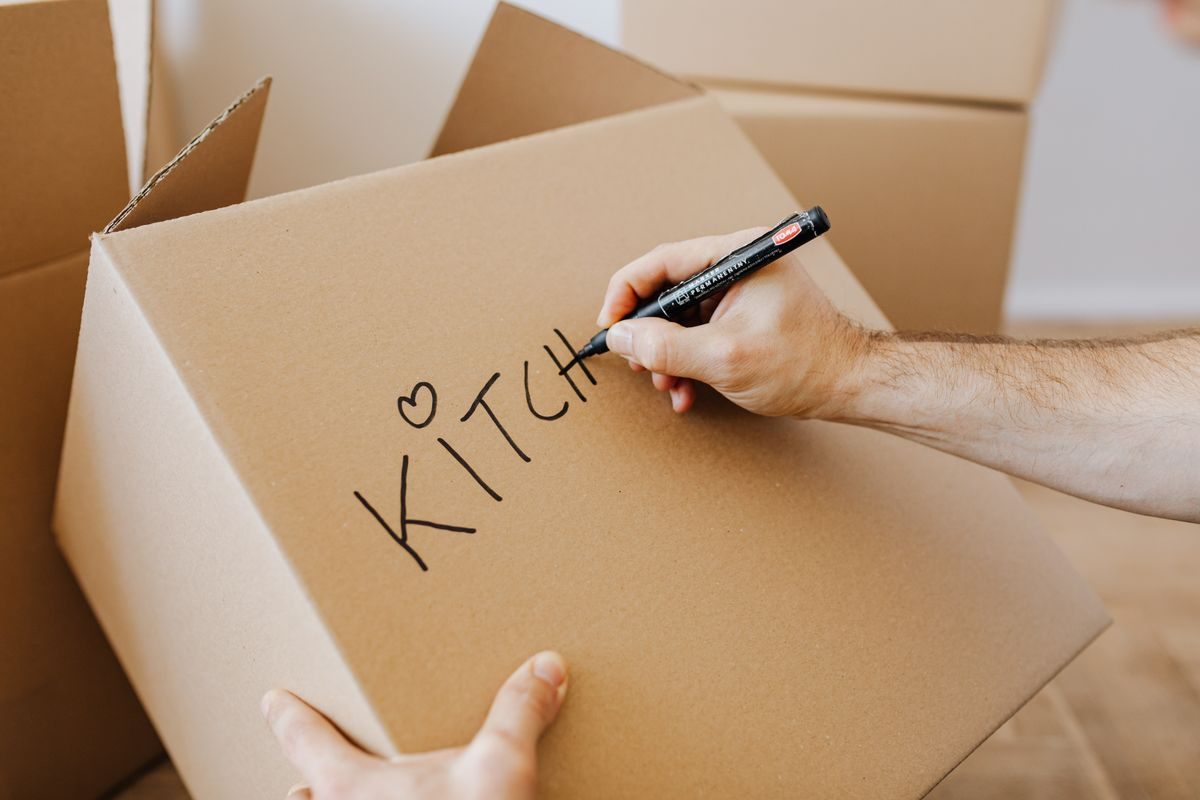
A box labelled «kitchen» tells the crew nothing useful at the new address, because they have never seen your old kitchen. A box labelled with the room it belongs in now goes straight there and never touches the hallway.
Write on the side, not the lid. In a stack, the lid is the one face nobody can read. And mark the fragile ones on two sides — the person picking it up is not always the person who packed it.
Room by room, and where the time actually goes
The kitchen is always the slowest room and always the one people underestimate. It is not the volume — it is that nearly every object needs wrapping on its own.
Wardrobes go faster than anyone expects, because hanging clothes move straight onto the rail in a wardrobe box. Drawers, oddly, take longer: the contents have to come out, and what comes out of a drawer is never one category of thing.
Books and shelves are quick but heavy, so they get packed early while there is still floor space to stack small boxes.
We pack the day before the move, not the same morning. Packing and carrying on one day means both get rushed, and the boxes that get rushed are the ones that arrive rattling.
What you should carry yourself
Not because we would lose them, but because they are excluded from goods-in-transit insurance almost everywhere, so a van is the wrong place for them.
- Cash, jewellery, watches.
- Passports, residence documents, contracts, anything you would have to queue to replace.
- Laptops and hard drives, or at least the backups.
- Keys — including the ones for the new place.
- Medication and anything you need in the first twenty-four hours.
The last one is practical rather than legal. The kettle, a change of clothes, the phone charger, toilet paper — pack them in one box, mark it, and put it in the van last so it comes out first. The evening of a move is not the time to be opening forty boxes looking for a towel.
If you are packing yourself
A lot of people do, and it is a reasonable way to spend less. Two things are worth knowing before you decide.
First, the split that works best: you pack the books, clothes, linen and everything unbreakable, and leave the kitchen, the fragile things and the electronics to us. That is where the technique matters and where the time goes.
Second, the honest one: boxes packed by you and not opened by us are outside the insurance cover. If the box arrives undamaged, nobody can establish what state the contents were in when it was sealed. That is standard across the industry rather than our rule — we explain how the cover works in our guide to moving insurance.
In short
- Plates on edge, wrapped individually. Books in small boxes. Fill every gap.
- Label the room it is going to, and write on the side of the box.
- Film goes over a blanket, never directly onto polished or veneered furniture.
- Pack the day before, not the morning of the move.
- Carry documents, cash, jewellery and keys yourself — they are excluded from cover.
- Boxes you packed yourself are outside the insurance if they arrive intact.
Want us to pack it?
Show us the flat in a ten-minute video call and you get a fixed price in writing within the hour, with packing itemised separately so you can decide.
Get a fixed price